

Wondering what to use for termite control? This guide covers DIY methods, chemical treatments, non-chemical options, and professional services to help you manage and prevent termite infestations.
Key Takeaways
Identifying early signs of termite infestation, such as mud tubes, hollow wood, and discarded wings, can help minimize damage and repair costs.
DIY termite control methods, including boric acid, diatomaceous earth, and essential oils, offer effective solutions for minor infestations and preventive measures.
Professional pest control services provide comprehensive solutions for severe termite infestations, with frequent inspections and varying treatment costs depending on the extent of the problem.
Identifying Termite Infestations
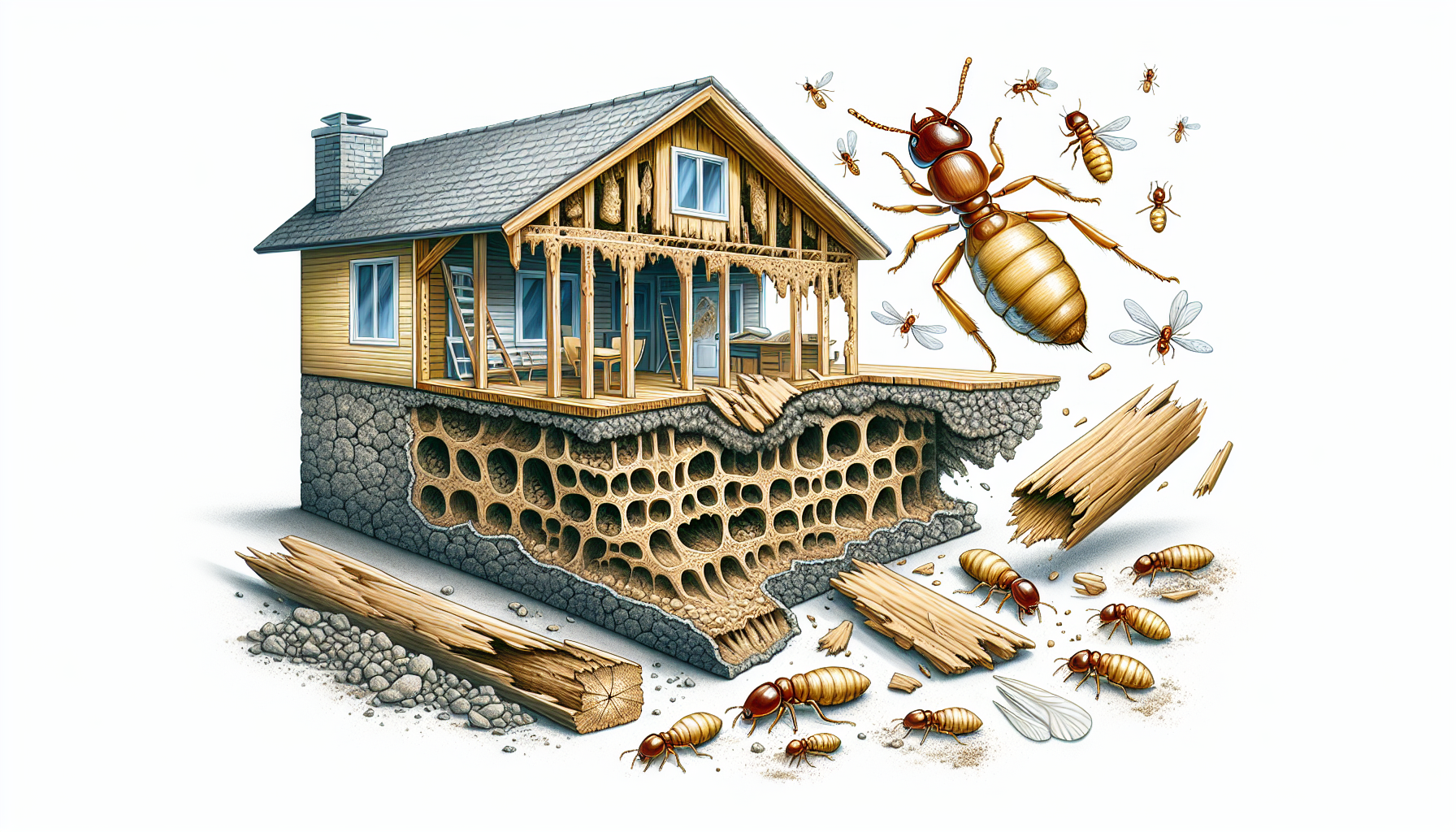
Recognizing the early presence of subterranean termite colonies can help you avoid substantial distress and financial loss associated with a termite infestation. Mud tubes are among the earliest indicators to look for. These pencil-sized constructions act as sheltered highways from their colony to food sources, created by subterranean termites. Their existence is a definitive signal of nearby termites.
Should you tap on wood structures within your abode and encounter a hollow sound, this could suggest that termites have been feasting on the interior, leaving behind an empty shell. Finding discarded wings around areas like windowsills or light fixtures can also point towards termite activity: swarmers lose their wings post locating an ideal spot for new colony formation.
Termite damage may manifest in signs such as deteriorating drywall and paint or wallpaper that appears bubbly or stripped off due to being undermined from underneath by termites’ feeding habits. Structural changes caused by terrace destruction might make doors and windows suddenly difficult to operate due to warping.
A musty odor permeating specific sections of your residence might be raising a red flag about moist conditions favorable for terms leading them potentially to occupy those spaces. If increased squeaking floorboards ore detached tiles become apparent there’s cause consider whether pest has compromised integrity beneath surface. It is paramount to quickly adequately respond to curb development Issues arising Ultimately prompt identifying taking measured action against critical limiting harm borne costs related repairs.
DIY Methods for Termite Control
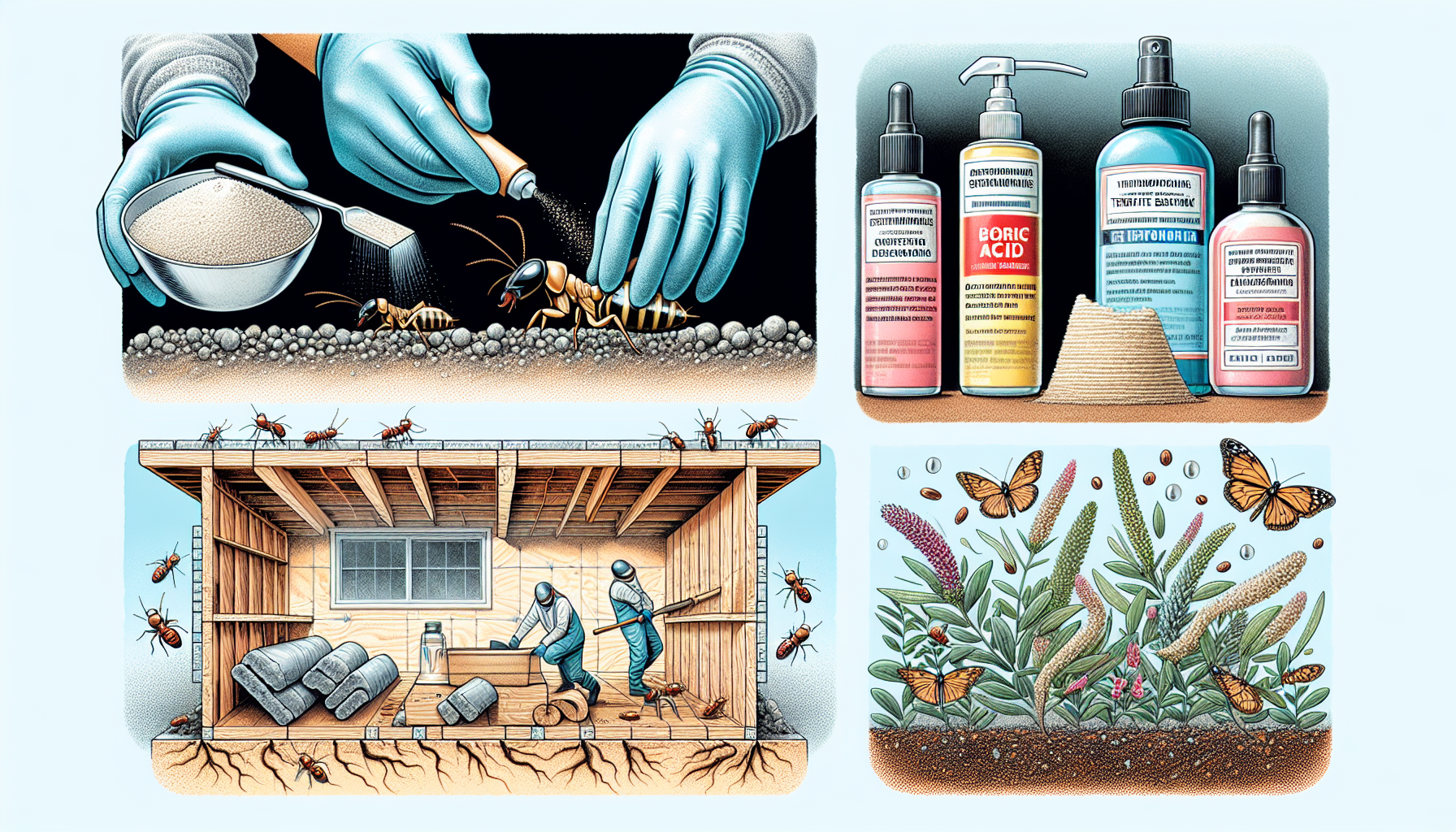
For individuals inclined towards self-managed solutions for termite infestations, various DIY methods can be employed. Utilizing boric acid, diatomaceous earth, and essential oils are effective ways to eradicate termites. These approaches not only address smaller scale infestations, but also serve as preventative actions.
Using Boric Acid
The use of boric acid is a common approach for those tackling termite control on their own. It functions by hindering the digestive processes of termites, ultimately causing them to perish. Direct application of this substance to areas plagued by termites is how it’s typically used. Applying a layer over wood surfaces can serve as a preventative strategy against prospective invasions and offers an eco-friendly protective option.
Given its ease-of-use and affordability, boric acid stands out as an effective method for eliminating termites from your environment.
Applying Diatomaceous Earth
Another efficient do-it-yourself approach is utilizing diatomaceous earth. Composed of fossilized remains of aquatic creatures, this powdery substance eradicates termites by causing dehydration upon contact. For best results, distribute it in locations infested by termites, including crawl spaces and near stacks of wood.
Since diatom (the key ingredient) poses no toxic threat, diatomaceous earth can be safely applied in environments where children and pets are present while still providing a potent means to eliminate termite populations.
Essential Oils for Termites
Natural alternatives for tackling termites include using essential oils such as orange oil and neem oil. Orange oil is potent due to its d-limonene content, which proves fatal to termites upon contact. Neem oil operates by hindering the feeding behavior and disrupting hormonal balance in termites, leading to their demise over time. These oils should be administered directly onto areas where termite activity or infested wood is observed.
Offering an eco-friendly substitute to traditional chemical methods, these essential oils serve as a more sustainable approach for eliminating termites.
Chemical Treatments for Termite Control
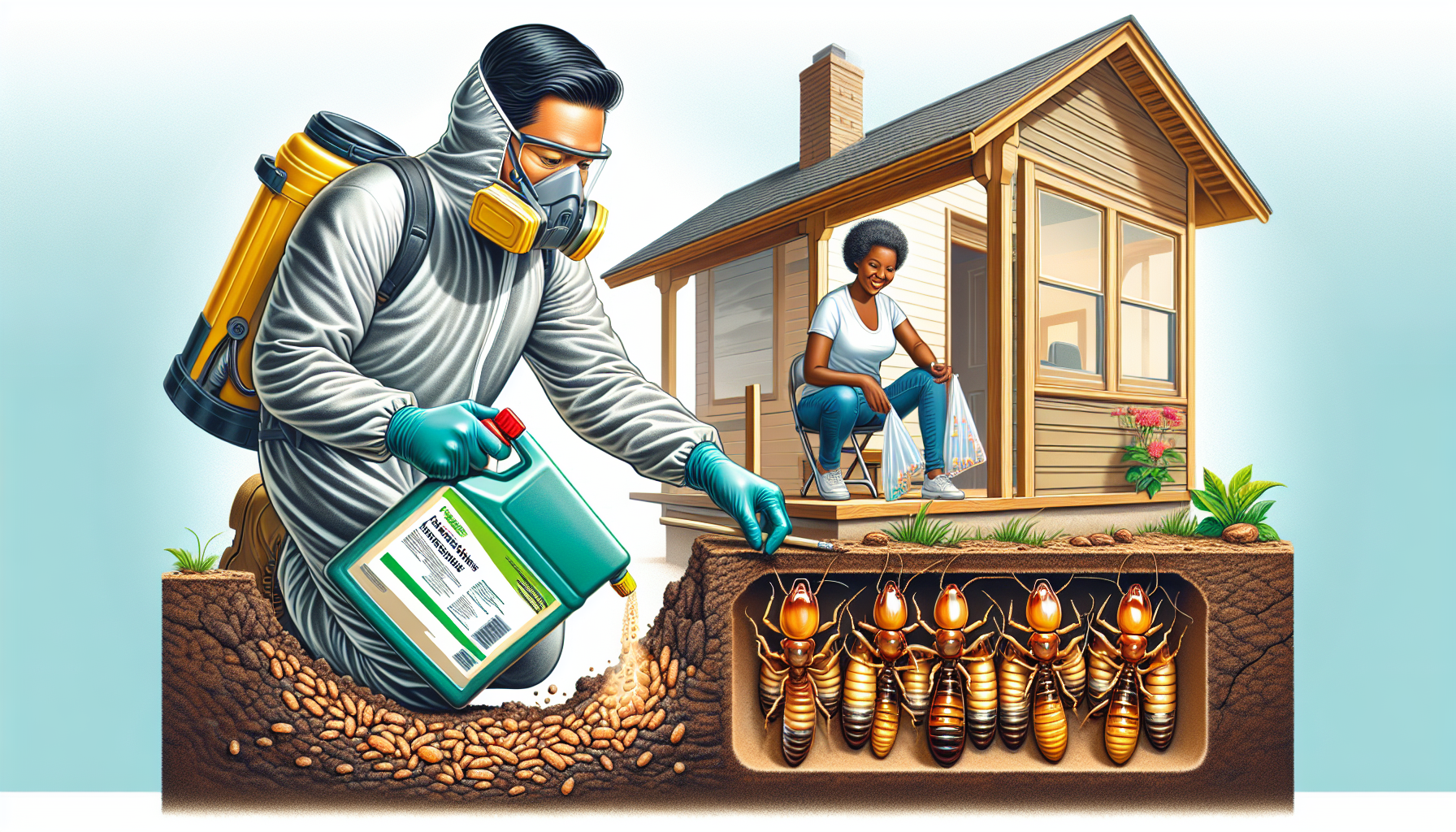
When DIY approaches are insufficient, chemical termite treatments offer a more potent alternative for eliminating termites. Substances such as fipronil and hexaflumuron are frequently utilized in these treatments, which can be applied as liquid termiticides, direct injections of chemicals or through termite baits.
Liquid Termiticides
Termiticides containing the active ingredients Fipronil or Imidacloprid can be highly effective in warding off termites. These substances are administered around your home’s perimeter, forming a chemical barrier that prevents termite entry. Termites inadvertently consume Fipronil while Imidacloprid targets their nervous system, both acting to protect your residence from infestation effectively.
Termite Baits
Another potent method for managing termite infestations involves the utilization of termite bait stations, which serve to:
Divert termites from infesting your property
Annihilate their colonies prior to them causing severe damage
Are capable of being installed both above ground or beneath it
Operate through employing chemicals such as hexaflumuron and noviflumuron that interrupt the developmental stages of termites.
As these bait stations attract termites, they act by bringing back the lethal substance to their colony. The poison is then shared amongst colony members, ultimately leading to the extermination of all its members. Eminent bait systems like Sentricon and FirstLine have been rigorously tested and confirmed for effectiveness in this purpose.
Conducting yearly examinations along with optimally distributed bait stations are instrumental in surveying and mitigating activity related to termites.
Direct Chemicals
Chemical treatments that directly target termite colonies include:
The direct injection of termiticides into the nests of termites
Focusing on particular areas infested with termites
Providing a highly efficacious approach to exterminate termites
Utilizing sprays administered through injection, which are formulated with powerful active substances designed to penetrate deeply within termite colonies.
Non-Chemical Treatments
For individuals interested in non-chemical approaches, various alternatives are available. Heat treatments and the use of beneficial nematodes alongside treatments to wood can be employed to manage termite infestations effectively without resorting to harmful chemicals.
Beneficial Nematodes
Microscopic roundworms known as beneficial nematodes serve as a natural predator to termites, attacking them and introducing symbiotic bacteria that poison the termite’s bloodstream, resulting in their demise within just a few days. These nematodes seek out their prey actively and infiltrate through existing body openings of termites. They offer an efficient pest control option without resorting to chemicals and can be easily acquired online or from retail outlets for application in areas plagued by infestations.
The method involves these tiny worms entering the bodies of termites where they proceed to release bacteria capable of breaking down the insect’s internal tissues, ultimately causing death. Due to its eco-friendly nature and safety for both pets and humans, this approach is especially favored among various methods available for termite elimination.
Heat Treatments
By increasing the temperature of both the termite-infested wood and its immediate vicinity to a minimum of 120°F for a duration of half an hour, heat treatments can efficiently eradicate termites along with their eggs. This approach halts the emergence of subsequent generations. The penetration capabilities of this method extend deep into wooden constructions and areas that are otherwise difficult to access, allowing for thorough removal of termites without relying on harmful chemicals.
Wood Treatments
Applying preservatives such as borate to wood surfaces is a part of wood treatments that forms a defensive shield against termites. This makes the treated wood serve as a physical barricade, hindering termites from consuming and harming the wooden structures.
Adding a new layer of paint can seal off minute cracks and gaps, which obstruct drywood termites from infiltrating.
Professional Pest Control Services

Engaging a pest control professional from established companies like Terminix or Orkin is typically the most effective way to address severe infestations. These experts offer robust termite control and safeguard against potential future invasions.
Choosing a Pest Control Company
When choosing among pest control companies, it’s vital to select one that offers specialized termite treatment options and has a broad reach. Renowned for their proficiency in termite control, companies such as Buzz Off stand out in the industry.
Professional Termite Inspection
Regular examinations conducted by experts who are adept in their field are vital for averting the harm caused by termites. By pinpointing both the presence of termite colonies and evaluating how much destruction they have wrought, these inspections facilitate proper remediation measures.
These professional evaluators employ a variety of sophisticated instruments and draw on deep knowledge to meticulously investigate properties for any signs of activity from termites.
Cost of Professional Termite Treatment
The cost for professional termite treatment can vary based on the infestation’s size and location, typically ranging from $400 to $1,500. The extent of the termite problem and the specific treatment method needed are influential factors that determine the final expense.
Preventative Measures Against Termites
Halting termite infestations is just as crucial as dealing with them. It’s fundamental to ensure adequate ventilation, establish preventive barriers, and carry out consistent inspections to avert termites effectively.
Maintaining Proper Ventilation
Ensuring your home is well-ventilated plays a key role in staving off termite infestations. It’s imperative to tackle any moisture-related issues found in basements or crawl spaces.
By repairing leaky pipes, defective gutter systems, and malfunctioning air conditioner condensation lines, you can minimize the accumulation of excess moisture that often lures termites into your living space.
Creating Barriers
Creating barriers is an essential method to limit the entry of termites into wooden structures. Minimizing contact between wood and soil, along with implementing metallic barriers, can be effective in deterring subterranean termites.
Regular Inspections
Annual termite inspections are crucial for the early identification and thwarting of infestations. These regular checks enable homeowners to detect evidence of termite activity promptly, ensuring that treatments can be administered swiftly and economically. Neglecting such inspections may result in substantial damage to property and lead to expensive repair costs.
Summary
To sum up, the successful management and deterrence of termite infestations hinge on employing a mix of DIY strategies alongside chemical and non-chemical solutions, as well as enlisting professional pest control assistance. Recognizing early indicators of an infestation and implementing preventive actions are essential in defending your residence against these damaging invaders. Prompt detection coupled with immediate response is crucial for reducing harm and avoiding expensive repair bills. Delay can lead to damage, so it’s important to act now to protect your home from termites.